
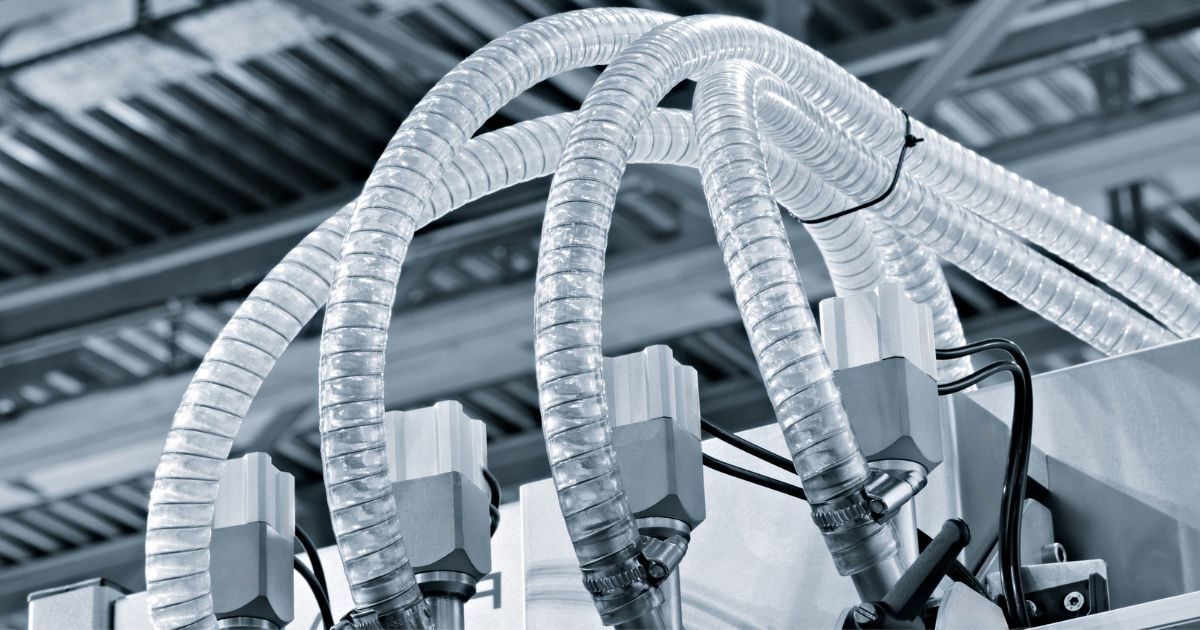
Choosing between different lab hose types is about more than finding a hose that fits your equipment. The material you select affects chemical compatibility, pressure handling, flexibility, and the long-term reliability of your system.
Because every application has different requirements, no single laboratory hose is the right choice for every setup. Understanding how common hose materials compare will help you choose the option that best matches your operating conditions.
Types of Laboratory Hoses
Here are some of the most common types of laboratory tubing and hoses, and where they typically perform best.
Silicone Tubing
Silicone tubing is known for its flexibility, making it a good choice for general laboratory use and systems with tight routing or frequent handling. It is easy to install and works well in lower-pressure systems where ease of use is a priority.
While silicone performs well in many situations, it is not the best choice for every chemical or high-pressure process. Always verify that it is compatible with the fluids and operating conditions in your system.
Rubber Vacuum Hoses
Rubber vacuum hoses are commonly used for vacuum systems and general-purpose laboratory connections. They offer good flexibility, which makes them easier to route between equipment, pumps, and other components.
This type of hose is a practical choice for flexible vacuum lines where durability and ease of handling matter. However, standard rubber vacuum hose is not usually the best choice for aggressive chemicals, solvents, or high-purity applications. For those uses, a more chemically resistant material such as PTFE or FKM would be a better fit.
PTFE Tubing
PTFE tubing is widely used for processes that require chemical resistance and high purity. It withstands many aggressive chemicals and solvents without reacting with them, making it a common choice for analytical, pharmaceutical, and chemical processing applications.
One tradeoff is flexibility. PTFE tubing is stiffer than many other materials, so it can be more difficult to route through tight spaces or around sharp bends. If your system requires frequent movement or complex routing, another material may be a better fit.
FKM (Fluoroelastomer) Tubing
FKM tubing offers strong resistance to many chemicals, solvents, and elevated temperatures. It is commonly used in systems where standard rubber tubing may wear more quickly or where greater chemical resistance is needed.
Depending on the process, it can also be a good option for certain vacuum systems.
PTFE-Lined Stainless Steel Braided Hoses
Some applications require both PTFE's chemical resistance and the strength to withstand higher operating pressures. PTFE-lined stainless steel braided hoses combine a PTFE inner liner with a stainless steel outer braid.
The PTFE liner resists many aggressive chemicals and solvents, while the stainless steel braid adds strength and abrasion resistance, and helps minimize hose expansion under pressure. These hoses are commonly used where higher pressures, repeated use, or demanding operating conditions exceed the capabilities of standard tubing.
Because of their reinforced construction, they are less flexible than standard tubing and require a larger bend radius when routing them through a system.
Choosing the Right Laboratory Hose
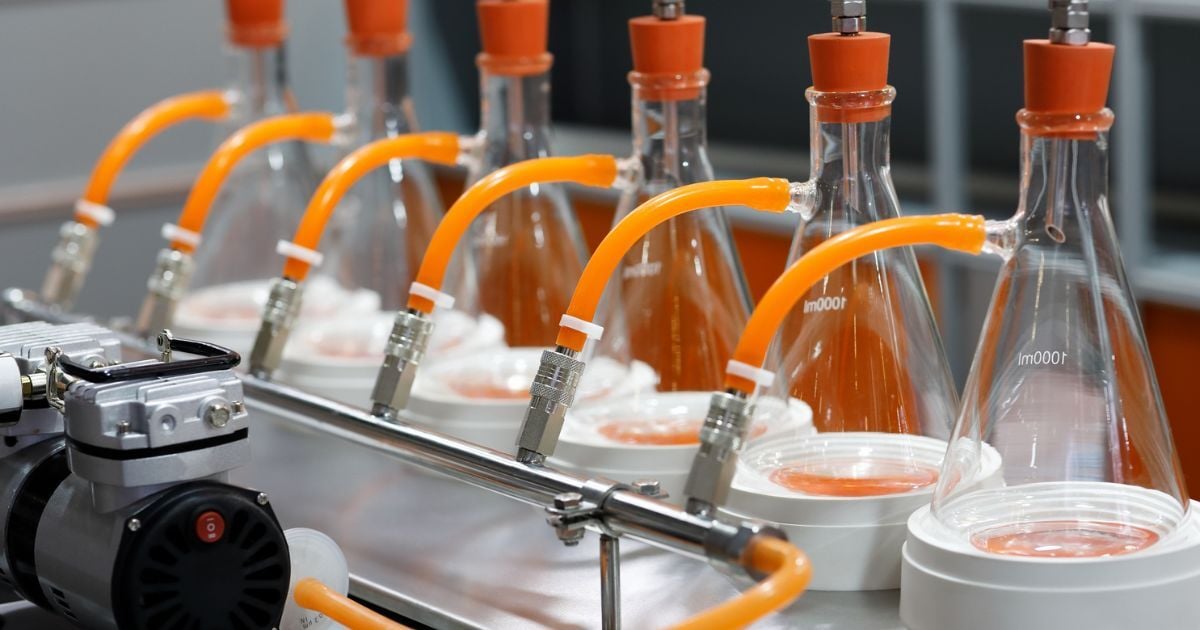
Each hose material offers different strengths. The next step is matching those characteristics to your specific system and operating conditions.
Chemical Compatibility Comes First
Start by confirming that the hose material is compatible with the chemicals it will carry. Choosing a compatible material helps prevent swelling, cracking, softening, or other forms of degradation that can shorten hose life. It also helps protect product purity by reducing the risk of contamination.
Even if a hose meets your pressure or temperature requirements, it will not perform well if it reacts with the fluid it carries.
Match the Hose to Pressure and Temperature
Next, consider your system's operating conditions. Some processes require heat-resistant tubing that maintains its properties at elevated temperatures, while others need high-pressure hoses that resist expansion under load.
It is also important to distinguish between pressure and vacuum systems. A hose that performs well under positive pressure may not be suitable for vacuum service, where collapse resistance becomes a key consideration. Always verify that the hose is rated for the conditions in which it will be used.
Consider Flexibility, Routing, and Service Life
Finally, think about how the hose will fit into your system. A material that works well on paper may be difficult to install if it cannot bend around equipment or fit within the available space.
As you compare options, consider:
- Tight bends and limited installation space
- Ease of routing and installation
- Resistance to kinking during use
- Wear from repeated movement or vibration
- UV exposure, if the hose will be used in those conditions
- Cleaning and maintenance requirements
- Expected service life and replacement intervals
Looking at these practical factors alongside chemical compatibility, pressure, and temperature will help you choose a hose that performs reliably over the long term.
Why Hose Selection Affects the Entire Lab System
A laboratory hose is more than a way to move fluids or gases from one piece of equipment to another. It is another connection point within the system, and its performance depends on how well it works with the surrounding components.
The hose must be compatible with the fittings, clamps, valves, and connection standards used throughout the assembly. Even if each component is high quality, a hose that is poorly matched to the process can lead to unnecessary maintenance, reduced efficiency, or become the weak point in the system.
Thinking about hose selection as part of the complete assembly also makes future maintenance and system expansion easier. When components are chosen to work together, you can make changes without introducing compatibility problems.
Choose the Right Hose for Your System
If you're building a new setup or replacing existing components, explore USA Lab's selection of laboratory hoses and tubing to find options designed for a wide range of laboratory systems, operating conditions, and processing applications.