
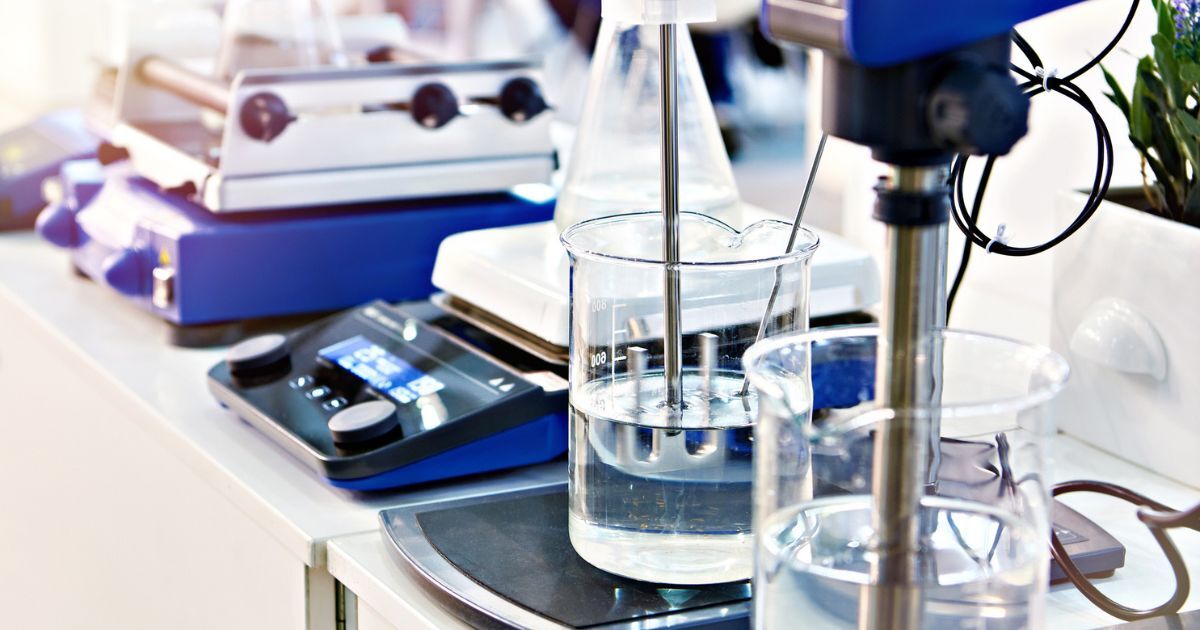
Laboratory mixing isn’t just about spinning faster. It’s the process of combining materials so they behave as one consistent system. You’re controlling how substances interact, dissolve, or stay evenly distributed.
You’ll often see terms like mixing, stirring, and agitation used interchangeably, but they’re slightly different:
- Mixing → The overall result (a uniform or controlled blend)
- Stirring → A method, usually a lower force, used for simple liquid movement
- Agitation → A broader term for any motion that moves material, from gentle to aggressive
These differences matter because the tool and motion you choose directly affect how well your process works, which is where most mixing problems actually start.
How to Think About Mixing: Motion → Load → Control
Most mixing problems come from a mismatch in how the system is set up. Instead of adjusting RPM and hoping for better results, it helps to look at mixing through three parts: motion, load, and control.
Motion – How Energy Moves Through the Liquid
Different mixing tools create different flow patterns. If the motion is too gentle, the materials won’t fully combine. If it’s too aggressive, you may introduce air into the sample or damage it.
The key is matching the motion to the goal, whether that’s dissolving, suspending, or breaking things apart.
Load – What the System Has to Overcome
Every mixing setup has a “load,” which includes viscosity, volume, and density/resistance.
As the load increases, the same setup becomes less effective. That’s why a stirrer that works in a small beaker may struggle in a larger vessel or a thicker solution.
Control – How Stable and Consistent the System Is
Even if motion and load are matched, poor control over speed, torque, and heat can break the process. Good control keeps your process consistent from start to finish.
Of these three, motion is usually the first place things go wrong.
Why Motion Matters More Than Speed
Speed (RPM) is easy to measure, so it often becomes the default way people think about laboratory mixing. But two setups can run at the same speed and produce completely different results.
That’s because motion controls how material actually moves, breaks apart, and redistributes. If the motion doesn’t match your process, increasing speed usually just creates problems, like:
- Air gets pulled into the sample
- Vortices form without improving mixing
- Particles still settle or clump
What matters more is how the fluid moves and not just how fast something spins.
Types of Motion in Laboratory Mixing
Once you understand that motion drives mixing, the next step is seeing how it actually shows up in real systems. Different tools move material in specific ways. That movement determines what the process can (and can’t) do.
Rotational Motion (Magnetic and Mechanical Stirrers)
This creates a circular flow inside the container. Material moves in loops, pulling liquid from top to bottom and back again.
- Best for dissolving and general liquid mixing
- Works well when the viscosity is low to moderate
- Limited when you need a strong force or particle breakup
You’ll often see magnetic stirrers and mechanical stirrers in basic mixing setups where circulation is enough.
For a deeper look at rotational motion, see Is a Magnetic Stirrer Enough and Magnetic vs Mechanical Stirrers vs Dispersers.
Orbital Motion (Shakers)
Instead of spinning in place, the entire container moves in a circular path. This keeps the contents in motion without forming a strong central vortex.
- Keeps samples moving evenly across the container
- Ideal for flasks, test tubes, and multi-sample setups
- Maintains consistency without aggressive force
Orbital shakers show up in workflows where uniform movement matters more than intensity.
For more on orbital motion, read Orbital Shakers Explained: Motion, Speed, and When to Use Them.
High Shear Motion (Dispersers and High Shear Lab Setups)
Dispersers apply a force that pulls materials apart, not just moves them around. It’s designed to overcome resistance and break down structure.
- Used for emulsions, suspensions, and thick mixtures
- Reduces particle size and improves uniformity
- Necessary when rotation alone can’t overcome the load
Each of these is a different way of moving energy through a system. Once you can recognize how that motion behaves, it becomes much easier to match it to your process.
How Load Changes Everything in a Mixing Setup
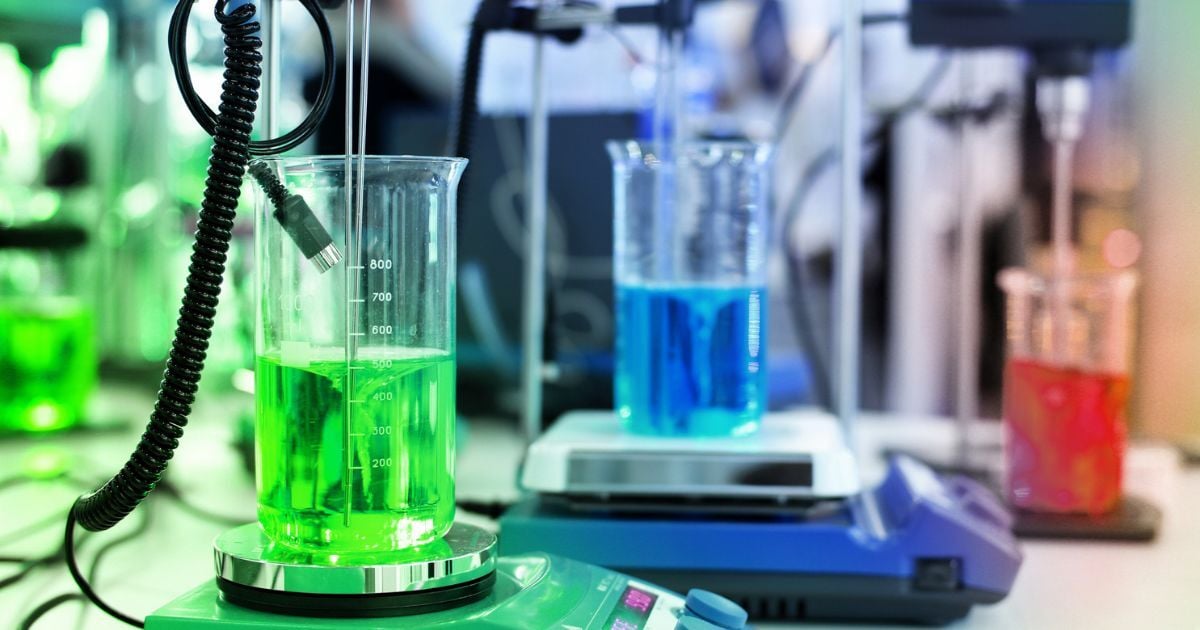
Load is what your mixing system has to push through. As the load increases, everything about the process changes, even if your speed stays the same.
This is why a setup that works in one situation can fail in another.
- Thicker liquids behave differently. As viscosity increases, fluid movement slows, and more force is required to move the material.
- Volume changes how energy spreads. Larger batches require more energy to move evenly. What worked in a small container may not reach the outer areas in a larger vessel.
- Underpowered systems lose control. When the system can’t keep up with the load, performance drops quickly. Speed alone can’t fix this.
Signs Your Mixer Can’t Handle the Load
Most mixing issues show up in predictable ways. If you see these, your system is likely underpowered for the load:
- Stalling → The stir bar or impeller slows down or stops under resistance.
- Inconsistent mixing → Some areas mix well while others don’t change.
- Dead zones → Sections of the container where material barely moves.
When these signs appear, the solution is to better match your equipment to the load.
How Control Affects Mixing Consistency and Outcomes
When control is stable, your process becomes repeatable. When it isn’t, even a strong setup produces inconsistent results.
Stable RPM keeps results consistent. Small changes in speed can shift how the liquid moves, even if everything else stays the same.
- Flow patterns weaken or collapse
- Mixing time becomes less predictable
- Results become inconsistent
Torque determines whether motion holds under load. Speed is how fast something spins. Torque is what keeps it moving when resistance increases.
- A low-torque system may spin fast at first, then slow down under load
- Increasing speed won’t fix a system that can’t maintain motion
- Higher torque keeps flow patterns stable in thicker or larger batches
Heat changes how the system behaves. Temperature affects viscosity, solubility, and reaction rates. That means it directly impacts mixing performance.
- Warmer liquids often flow more easily, improving circulation
- Some materials dissolve faster at higher temperatures
- Too much heat can change the process or damage the sample
With hot plate stirrers, heat becomes part of the system, so control here means managing both motion and temperature together.
So even if you have the right motion and enough power, poor control can still break your process.
How to Choose the Right Mixing Approach for Your Application
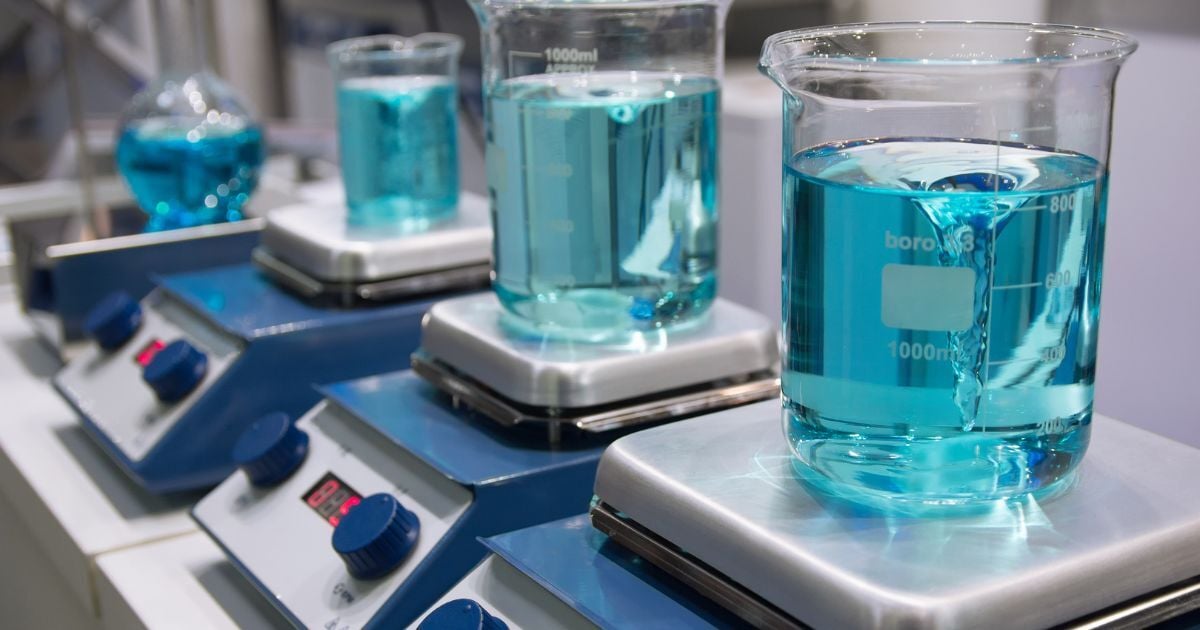
Once you understand motion, load, and control, the next step is to apply that thinking to your process. Instead of starting with equipment, walk through these three questions.
Start With Motion
Ask: What type of movement does this process need?
- Do you need circulation to keep materials evenly distributed?
- Do you need consistent movement across multiple samples?
- Do you need shear force to break materials apart?
This defines how energy needs to move through the system. If the motion is wrong, the process won’t work.
Evaluate the Load
Next, look at what the system has to overcome.
- How thick is the material?
- How much volume are you working with?
- How much resistance will build during mixing?
As the load increases, the system needs more force to maintain motion. This is where many setups start to fail.
Match Control to Your Process
Finally, consider how stable the process needs to be.
- Does speed need to stay consistent over time?
- Will resistance change during mixing?
- Does temperature affect how the material behaves?
Control is what keeps your results repeatable. Without it, even a well-matched setup can drift.
The Real Goal of Laboratory Mixing
Most mixing problems aren’t speed problems but mismatches between motion, load, and control. When you understand how these three factors work together, it becomes much easier to spot what’s going wrong and what needs to change.
Explore USA Lab’s mixing equipment to build a system that matches your process and not just your specs.