
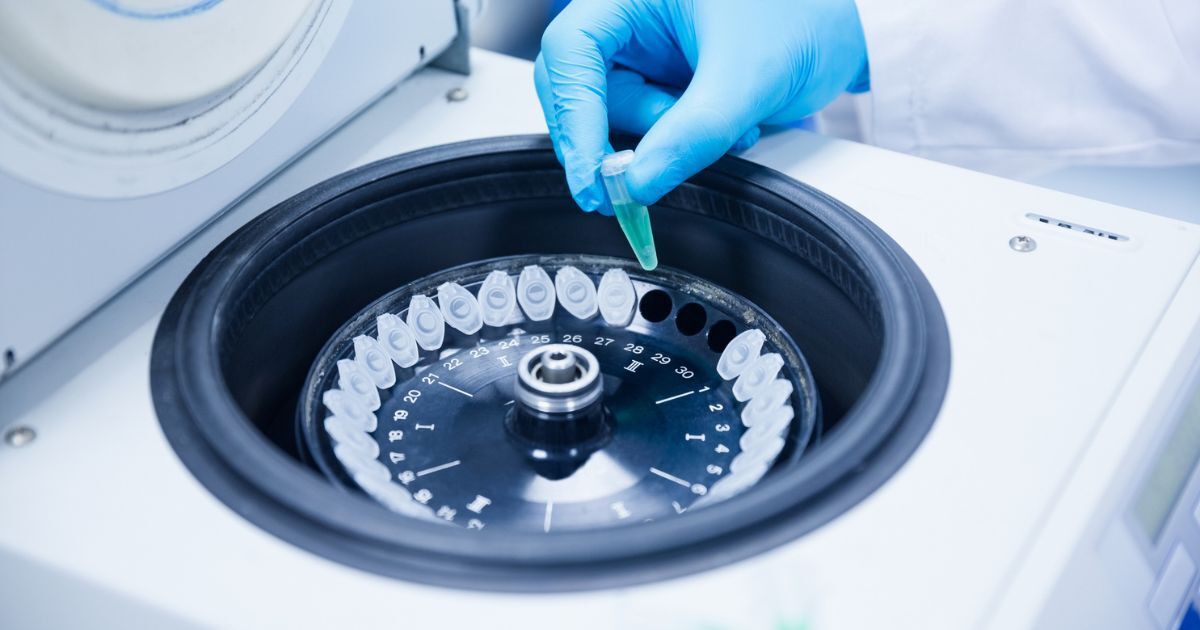
If you have ever struggled with slow filtration, clogged filters, or mixtures that refuse to settle, you’ve already run into the limits of flow-based separation. That is where centrifugation starts to make more sense for your lab.
What Is a Centrifuge Used For?
Centrifuges are most often used when you need to separate liquids from solids, isolate fine particles, or clarify a mixture that would take too long to settle on its own. In many cases, a centrifuge is used to separate materials that look uniform at first but behave very differently under force.
How Centrifuges Actually Separate Materials
To understand why centrifuges work so well in certain situations, it helps to look at what is happening inside the machine.
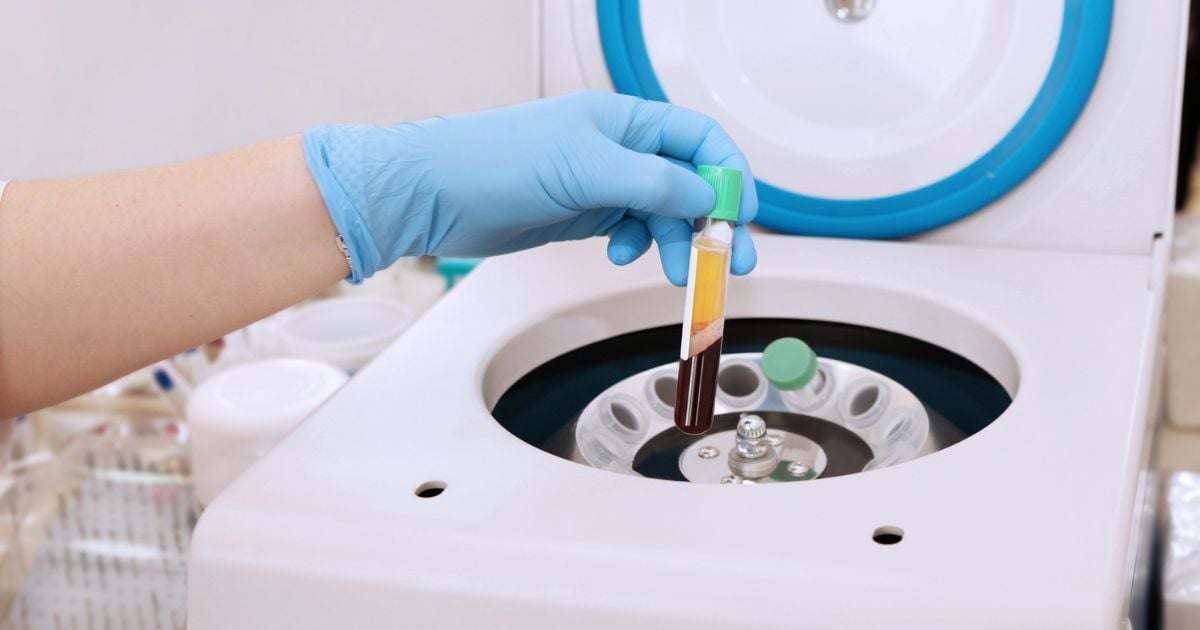
A centrifuge separates materials based on density by spinning samples at high speed. When a sample spins at high speed, it creates centrifugal force. This force pushes materials outward from the center of rotation.
- Denser materials move outward first.
- Lighter materials stay closer to the center.
- Over time, this creates distinct layers based on density.
This is the core of centrifuge-based separation. Instead of waiting for particles to settle naturally or using filters, the system speeds up that separation using controlled force.
Modern centrifuge technology is designed to apply that force evenly and consistently, so results are faster and more predictable.
Common Centrifuge Uses
Centrifuges are used across a wide range of lab workflows because they solve a core problem: separating materials quickly and reliably.
- Clarifying liquids – One of the most common centrifuge uses is removing fine particles from a liquid, such as clearing haze from solutions or removing suspended solids that will not settle.
- Separating phases (Liquid/Liquid or Solid/Liquid) – Centrifuges are widely used to separate materials that naturally form layers, like liquid/liquid separations where densities differ or solid/liquid separations where particles need to be pulled out.
- Sample preparation – Many workflows depend on clean, consistent samples. You may need to isolate components for more accurate results or remove unwanted material that could interfere with measurements.
- Biological separations – Centrifugation is essential in biological and life science labs, for separating cells from liquids, isolating proteins or other components, or preparing samples for further processing.
Across all these examples, the pattern is the same: when materials will not settle, filter, or separate easily on their own, centrifuges step in to speed up and control the process.
When Does Centrifugation Work Better Than Filtration?
Filtration and centrifugation solve the same problem in different ways, and that difference is what matters.
Filtration relies on particle size. It works by physically blocking larger particles while letting liquid pass through a membrane or filter media. This works well when particles are large, solid, and easy to trap.
Centrifugation relies on density differences. Instead of blocking particles, it uses force to separate them. Heavier components move outward, while lighter ones remain closer to the center, creating a clean separation without a barrier.
Here’s where the shift happens: Some separations fail with filters but succeed instantly with force.
- Very fine particles can slip through filters or clog them before the job is done.
- Thick or complex mixtures can slow filtration to a crawl.
But with centrifugation, those same materials are separated quickly because the process does not depend on pore size. It depends on how materials respond to force. Once you understand that difference, it becomes much easier to choose the right method for your workflow.
When to Use Centrifugation vs Filtration
The right choice comes down to three factors:
1. Particle Behavior (Size vs Density)
Start with how the material behaves.
- If particles are large and easy to trap → filtration works well
- If particles are very fine or suspended → centrifugation is often the better choice
This matters because filtration depends on size, while centrifugation depends on density. When size is not enough to separate materials, density usually is.
2. Fluid Resistance (Viscosity and Clogging Risk)
Next, look at how the fluid moves.
- Thin, free-flowing liquids → easier to filter
- Thick, sticky, or particle-heavy mixtures → tend to clog filters
If the flow slows down or stops, filtration becomes inefficient fast. Centrifugation avoids this issue because it does not rely on material passing through a membrane.
3. Separation Goal (Clarity, Recovery, Speed)
Finally, define what you actually need from the result.
- Need a quick clarification → centrifugation saves time
- Need to capture solids on a filter → filtration is the better fit
- Need high recovery of fine particles → centrifugation is often more reliable
Once you work through these three factors, the right method becomes much clearer. The next step is choosing equipment that matches your process.
Choosing the Right Centrifuge for Your Workflow
Once you know centrifugation is the right method, the next step is choosing a system that actually fits your workflow.
Capacity and Volume
Start with how much material you are handling.
- Small batch work → benchtop units with lower capacity
- Larger or repeated runs → higher-capacity systems to reduce cycle count
If you outgrow your capacity, you will feel it quickly through longer processing times and workflow bottlenecks.
Relative Centrifugal Force (RFC)
Not all separations require the same level of RFC.
- Light separations → lower RCF is often enough
- Fine or dense materials → higher RCF improves results
Matching the force to your application helps you get clean separation without overworking the sample. This is where understanding your material pays off.
Benchtop vs Floor Models
Both your space and throughput matter here.
- Benchtop centrifuges → compact, easier to integrate into smaller labs
- Floor models → higher capacity, better for continuous or high-volume work
If your workflow is growing, moving to a larger system can improve efficiency more than increasing run time on a smaller unit.
New vs Used Centrifuges
This is often a budget decision, but it also affects flexibility.
- New centrifuges → latest features, warranties, and long-term reliability
- Used centrifuges → lower upfront cost, solid performance for many applications
Used systems make sense when your process is already defined, and you know the performance range you need. They can be a practical way to scale without overinvesting early.
Choosing the Right Separation Method
Centrifugation and filtration are not competing methods, but are tools designed for different conditions. Once you understand that difference, the decision becomes much simpler.
If centrifugation is the right fit for your workflow, the next step is to explore the right system.
USA Lab Equipment offers a range of centrifuges designed to support everything from small-batch work to high-volume applications, so you can match your setup to your separation needs with confidence.