
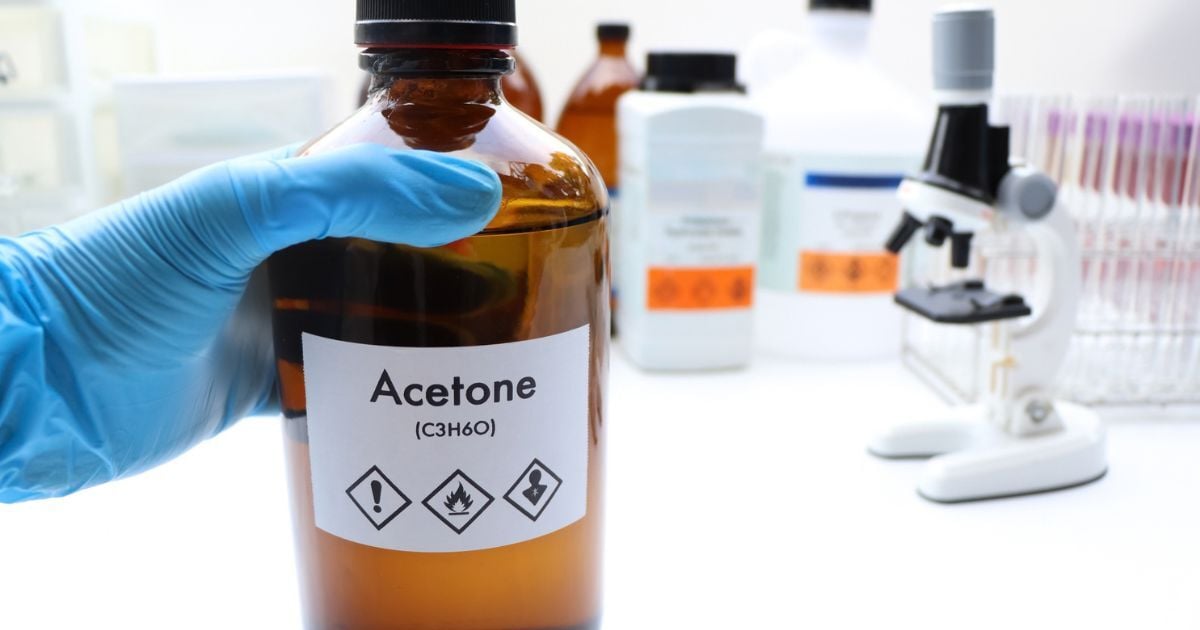
Acetone is a familiar solvent in many laboratories, but knowing its lab uses is only part of deciding when to use it. Its ability to dissolve many materials, mix with water, and evaporate quickly makes it useful for cleaning, drying, and other laboratory processes.
Those same properties also affect which materials acetone can contact, what grade a procedure may require, and how the solvent should be handled. Understanding how acetone behaves will help you determine where it fits into your laboratory workflow and where another solvent may be more appropriate.
What Is Acetone?
Acetone is a colorless, fast-evaporating, highly flammable organic solvent. It is the simplest ketone, with the chemical formula C₃H₆O. It is sometimes referred to as 2-propanone or propanone.
What Properties Make Acetone Useful in the Laboratory?
Acetone combines several properties that make it useful for laboratory work. It dissolves many substances, mixes completely with water, and evaporates quickly.
Acetone Is an Effective Solvent for Many Substances
One of the most useful properties of acetone is its ability to dissolve a wide range of organic substances. However, the specific material matters. Acetone does not dissolve everything, and its strong solvent action can also affect materials you want to leave intact.
Acetone Mixes With Water
Acetone is completely miscible with water. Instead of separating into its own layer, it mixes with water in any proportion. This can make acetone useful in procedures involving both aqueous and compatible organic materials.
Acetone Evaporates Quickly
Acetone readily evaporates when exposed to air because of its relatively low boiling point and high vapor pressure. Temperature, airflow, exposed surface area, and other conditions all affect how quickly acetone evaporates.
This high volatility can be useful when a laboratory needs a solvent to dry or be removed relatively quickly. It also means that exposed acetone generates vapor and can be lost through evaporation. These factors should be considered whenever rapid evaporation is a reason for using it.
What Are Common Acetone Laboratory Uses?
Common acetone laboratory uses include cleaning, degreasing, dissolving compatible materials, and supporting processes where a fast-evaporating solvent is useful. Whether acetone is appropriate depends on the materials involved, the required solvent grade, and the specific laboratory procedure.
Removing Oils, Grease, and Organic Residues
Labs commonly use acetone as a cleaning agent because it dissolves certain oils, greases, adhesives, and other organic residues. When the materials are compatible, this can include removing contaminants from glassware, tools, and work surfaces.
However, its ability to dissolve materials means it should not be treated as an all-purpose cleaner.
Supporting Fast Drying After Cleaning or Rinsing
Acetone can also be useful in workflows where a solvent needs to evaporate quickly after cleaning or rinsing. Its high volatility allows exposed acetone to leave a surface relatively quickly under suitable conditions.
That does not make acetone an appropriate final rinse for every piece of lab equipment. The material, procedure, and potential for contamination all need to support its use.
Using Acetone as a Process Solvent
Acetone's role in the laboratory extends beyond cleaning. It can also serve as a process solvent when a procedure calls for its particular combination of solvency, water miscibility, and volatility.
Depending on the application, a lab may use acetone to dissolve compatible organic compounds, prepare solutions or materials, or carry out a process where the solvent will later need to evaporate.
Research, analytical, and processing procedures can have very different requirements. Acetone should be selected because its properties fit the procedure, not because it can automatically replace another common laboratory solvent.
Does Acetone Grade Matter for Laboratory Use?
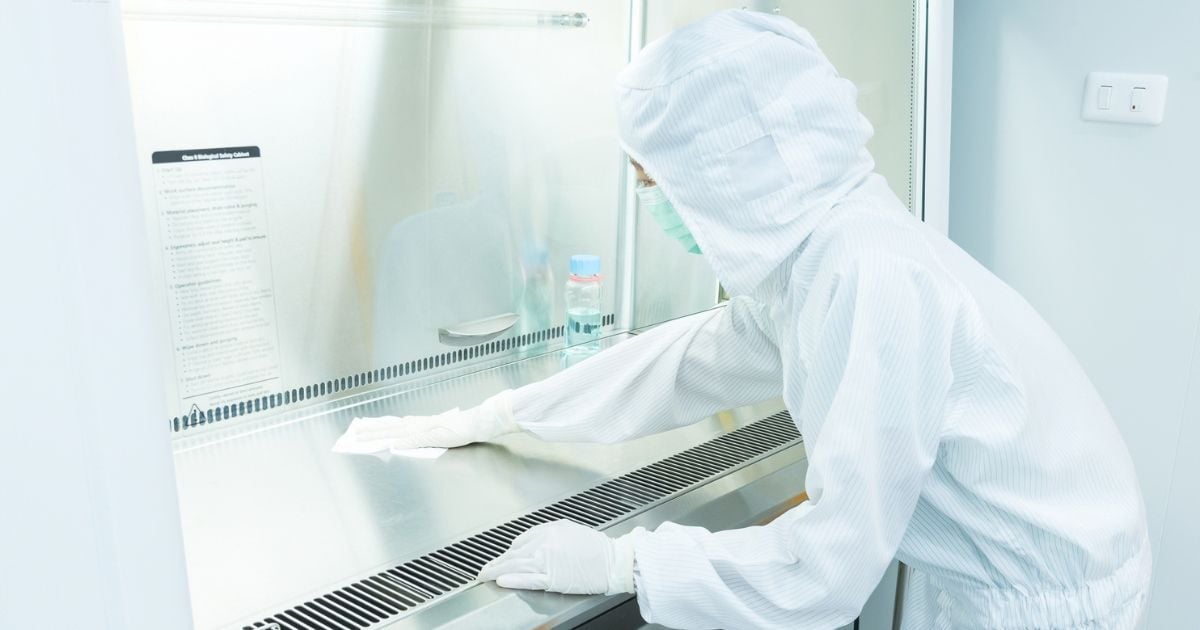
Yes. Acetone products can have different purity levels and impurity specifications, so the right grade depends on how you plan to use the solvent.
Technical-grade acetone is often suitable for general cleaning, equipment maintenance, and other applications where tightly controlled purity is not required. For example, USA Lab Acetone 99% is a technical-grade product intended for general laboratory and industrial use.
Research, analytical, or other tightly controlled procedures may require reagent, ACS, or another grade with specific limits on impurities. In these applications, even small amounts of unwanted substances could interfere with a procedure or affect results.
Higher purity is not automatically better for every task. Instead, match the acetone grade to the application's requirements.
Check the product specifications and certificate of analysis (COA) when purity matters, along with the safety data sheet (SDS) for handling information. Your laboratory's procedures or testing requirements may also specify which grade to use.
What Materials Should You Check Before Using Acetone?
Before using acetone on lab equipment, consider both what you want it to dissolve and what you do not want it to affect. The same solvent strength that helps remove residues can also damage incompatible materials.
Some plastics, elastomers, coatings, adhesives, painted surfaces, and seals may soften, cloud, swell, or degrade after exposure to acetone. This matters when cleaning or processing around equipment with multiple materials, even if the main surface itself is compatible. For example, glass may tolerate acetone while a nearby seal, plastic fitting, coating, or adhesive does not.
Check the equipment manufacturer's recommendations or the material's chemical compatibility information before using acetone when you are unsure. This helps prevent a useful solvent from damaging the lab equipment or components you intended to clean.
What Should Laboratories Consider When Handling Acetone?
Acetone's flammability and rapid evaporation require careful handling. Laboratories should control ignition sources and vapor exposure, store acetone appropriately, and follow the product's safety data sheet for specific precautions.
Flammability and Ignition Sources
Acetone is highly flammable. NIOSH lists its flash point as 0°F (-18°C), meaning it produces ignitable vapors well below normal room temperature.
Keep acetone and its vapors away from open flames, sparks, hot surfaces, and other potential ignition sources. Storage should also follow your laboratory's requirements for flammable liquids.
Ventilation and Vapor Exposure
Because acetone readily evaporates, vapors can build up when it is used in poorly ventilated areas or over larger exposed surfaces.
Use acetone with appropriate ventilation and follow your laboratory's procedures for controlling exposure to solvent vapor. Occupational exposure limits for acetone also apply, so the amount used and conditions in the workspace affect the precautions needed.
Storage, PPE, and the SDS
Store acetone in approved containers and locations suitable for flammable liquids. Skin and eye protection should match the task and the guidance provided in the SDS.
Pay particular attention to glove selection. Disposable gloves are not automatically suitable for every solvent, so choose a glove material based on its chemical compatibility with acetone and the expected type and duration of contact.
The SDS should guide decisions about storage, ventilation, PPE, spill response, and disposal.
How Do You Know If Acetone Is Appropriate for Your Application?
Acetone is useful in laboratories because it combines strong solvent performance, water miscibility, and rapid evaporation. But those properties do not make it the right solvent for every job. Matching the solvent to the application, materials, required grade, and handling conditions will help you use it appropriately.
For general laboratory cleaning, degreasing, and other compatible applications, USA Lab Acetone 99% provides a technical-grade option available in multiple quantities for laboratory and industrial use.