
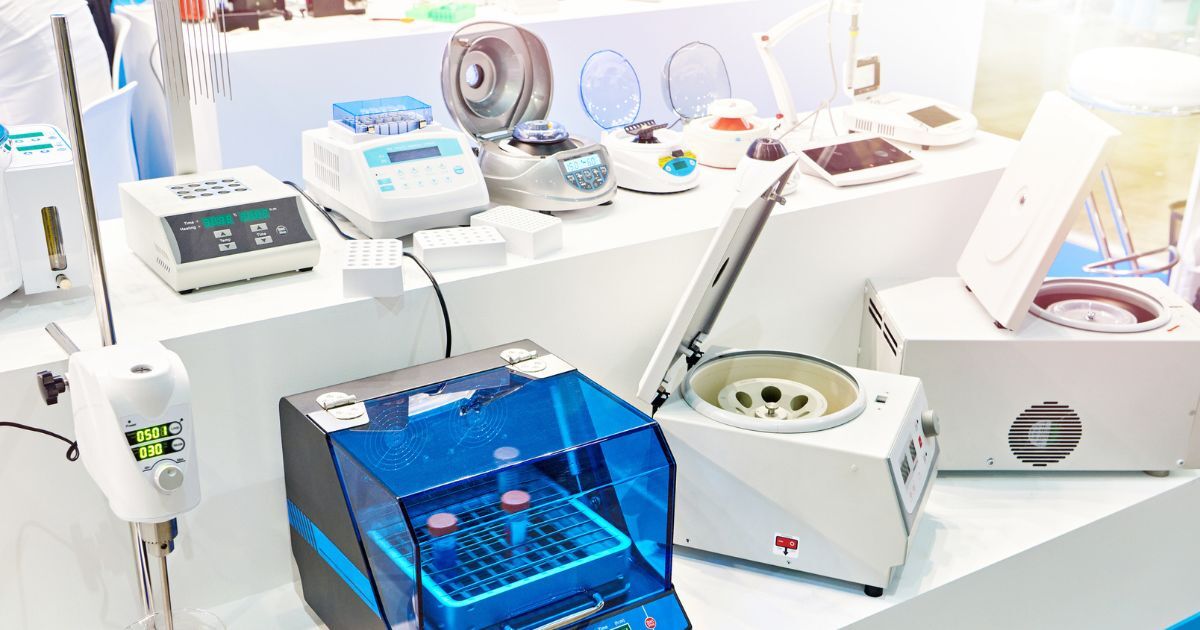
Benchtop lab equipment is built for flexibility. It allows you to test ideas and run small batches without committing to full-scale production. For research and early-stage development, that’s exactly what you need.
But there comes a point when benchtop lab equipment starts doing more than it was designed for. And the shift doesn’t happen all at once. This guide will help you recognize when benchtop equipment is supporting your process and when it may be holding it back.
Why Benchtop Equipment Feels “Good Enough” (Until It Doesn’t)
Benchtop equipment often performs well in early stages. You get usable data, complete runs, and refine your method. At this stage, inconsistencies are easy to correct. But as demands grow, those same corrections become harder to manage.
It Worked Last Time
You might hear this in the lab: “It worked last time.” And that can be true, but what made it work? On bench systems, repeatability is often supported by manual adjustments. An operator might:
- Nudge the temperature slightly
- Adjust mixing speed mid-run
- Add material more slowly than written in the SOP
Those changes aren’t always documented in detail. They become part of how a specific person runs the process. That means the system may appear stable, but it’s partially supported by experience and not design.
When one person gets consistent results while another struggles, that’s a sign the equipment isn’t doing all the work. The operator is filling the gaps.
Manual Workarounds Become Normal
Over time, small fixes become routine. You hand-tune temperatures because the controller overshoots, or you watch the reaction closely because timing varies. These don’t feel like major issues, but constant supervision is not the same as system stability.
When you rely on batch-specific tweaks, you’re compensating for limits in control, scale, or load handling. At small volumes, that may be manageable. At higher volumes, those same adjustments become harder to predict and standardize.
Low Throughput Hides Structural Limits
Small-batch success doesn’t automatically translate to production reliability. At bench scale, loads are light. Heat moves quickly, mixing looks uniform, and material volumes are easy to manage.
As you increase volume, physics changes. Heat transfer behaves differently since larger volumes take longer to stabilize. Hot spots can form, and cooling takes more time. Mixing efficiency can also drop. What looks uniform in a small vessel may show layering or uneven distribution in a larger one.
These structural limits are often invisible at low throughput. You don’t see them because the system isn’t under stress. But once demand increases, the gaps show up.
The Three Signals You’ve Outgrown Benchtop Equipment
If you recognize these signals, your process may be ready for pilot conditions.
1. Repeatability Starts to Slip
Results vary more than they used to. You might notice:
- More variation between runs
- Longer setup times before you hit steady conditions
- Extra steps added “just in case”
Instead of refining the process, you’re troubleshooting it. When repeatability requires constant attention, the system may be operating beyond its comfort zone.
2. Load Exposes Weak Points
Load includes more than volume. It also means runtime, thermal mass, and duty cycle. As those increase, you may see:
- Slower temperature stabilization
- Uneven heat distribution
- Motors running hotter
- Controller drift over long runs
- Faster component wear
Bench systems are typically designed for controlled testing, not continuous or high-duty operation. When sustained operation causes performance changes, that’s a scaling signal.
3. Labor Costs Start Replacing Equipment Costs
This is often the clearest signal. Instead of upgrading equipment, you add oversight.
- An operator monitors the temperature constantly.
- Someone adjusts parameters mid-run.
- You assign extra staff to manage throughput.
Manual supervision can carry a bench system further than expected. But it comes at a cost: time, labor, and attention are all resources. When labor compensates for system limitations, you’re no longer scaling the process. You’re scaling effort.
What Changes at Pilot Scale?

At the bench, you’re still learning. At pilot scale, you’re proving that what you learned holds up under pressure. That shift changes how the equipment is designed and how you use it.
Bench Prioritizes Flexibility
Benchtop equipment is built for adjustment.
- You can change parameters quickly.
- You can modify a setup between runs.
- You can test different materials, temperatures, or mixing profiles without rebuilding the entire system.
That’s the strength of benchtop lab equipment.
Pilot Prioritizes Repeatability
Pilot systems are built around a different question: Can this process run the same way every time?
Pilot-scale setups typically emphasize:
- Fixed or tightly controlled process parameters
- More stable environmental conditions
- Automated monitoring and logging
- Integrated safety systems
- Equipment designed for sustained duty cycles
Instead of relying on operator adjustments, the system maintains control. This doesn’t mean you lose all flexibility. But adjustments become intentional and documented, and not improvised mid-run.
At pilot scale, variation becomes risk. Small shifts in temperature can affect yield, or inconsistent mixing can affect product quality. What felt like a manageable variation at bench scale becomes unacceptable at pilot scale because more is at stake: more material, more time, more cost.
Bench scale asks, “What happens if we try this?”
Pilot scale asks, “Can we make this happen the same way every time?”
When your process depends on the second question, your equipment has to reflect it.
What Not to Assume When Moving Up
Moving from benchtop equipment to pilot scale isn’t a simple upgrade. It’s a shift in how your process behaves. Once you decide to scale, the next risk isn’t under-capacity but oversimplification.
“I’ll just buy a bigger version.”
It’s tempting to think you can take your current setup and just increase vessel size. But geometry changes performance.
A larger reactor doesn’t just hold more material. Its height-to-width ratio may differ, or the impeller placement changes. That affects mixing patterns and flow behavior.
Thermal scaling also becomes more complex. Heat doesn’t move through large volumes the same way it does in small ones. What stabilized quickly at bench scale may take much longer at pilot scale.
Even with similar control systems, the physical dynamics are different. A “bigger version” isn’t always a scaled copy. It’s often a different system with different behavior.
“If it works small, it will work large.”
At bench scale, surface area-to-volume ratios are high. Heat transfers quickly, and mixing feels efficient.
As volume increases, those ratios shift since reactions behave differently under higher load. Heat takes longer to move through the system, and mass transfer slows. The same setpoint doesn’t always produce the same outcome.
Understanding that shift early prevents costly troubleshooting later.
“More volume equals more output.”
More volume can increase output, but only if the rest of your system supports it. When you scale up, bottlenecks often move. You might find:
- Heating or cooling becomes the limiting factor
- Mixing can’t keep up with material load
- Filtration or separation slows downstream
- Measurement and control systems lag behind demand
Upstream and downstream steps matter just as much as vessel size. If one stage can’t keep pace, the entire workflow slows down. When you move beyond benchtop equipment, you expand and redesign the process environment.
How to Evaluate the Transition From Bench to Pilot

If you’re unsure whether it’s time to move beyond benchtop equipment, don’t guess. Run a simple evaluation.
1. What is my true throughput requirement?
- How many units or batches do you need per week?
- How long does each run take from setup to completion?
- How much downtime occurs between runs?
Now compare that to your current system’s realistic capacity (not its best-case output). If you’re constantly pushing to meet targets, your throughput requirement may already exceed what your benchtop lab equipment was designed for.
2. How many hours per week is this system running?
- Is your equipment running 5–10 hours per week?
- Or is it running 30–50+ hours per week?
- Are you extending runtimes just to meet demand?
Longer weekly runtime increases wear. It also increases the chance of drift or component fatigue. If your system rarely rests, you’re operating closer to pilot conditions than bench conditions.
3. How consistent are results across operators?
- Do two operators get the same results using the same SOP?
- Or does performance depend on who’s running the system?
- Are undocumented “tips” required to hit target outcomes?
If consistency depends on experience rather than equipment stability, that’s a sign you’re relying on manual correction. At pilot scale, repeatability should come from system design and not operator intuition.
4. What happens when batch size doubles?
- Does temperature control take longer to stabilize?
- Does mixing become uneven?
- Does cycle time increase more than expected?
- Does yield change?
If doubling volume causes unpredictable behavior, scaling further will only magnify those issues.
5. Is labor compensating for system limitations?
- Are operators monitoring runs constantly?
- Are manual adjustments required mid-process?
- Have you added staff instead of upgrading equipment?
When labor replaces system stability, operating costs rise. That’s why you should calculate real operating costs, not just the purchase price.
Factor in:
- Labor hours per batch
- Troubleshooting time
- Downtime from component wear
- Material loss from inconsistent runs
A benchtop lab equipment setup may cost less upfront. But if it demands constant oversight, the long-term cost can exceed that of a properly sized pilot system.
If your process still thrives on flexibility and experimentation, bench scale makes sense. If your workload demands repeatability under sustained load, you’re likely ready for the next step.
Where Benchtop Equipment Still Makes Sense
Outgrowing benchtop equipment doesn’t mean it stops being valuable. In many labs, it’s exactly the right tool. Not every process needs pilot-scale, and not every growth phase requires larger systems.
Here’s where bench setups continue to make sense.
- R&D environments – In research settings, you’re still asking questions. You might adjust temperature, pressure, mixing speed, or material inputs from one run to the next. Smaller systems make that easy.
- Proof-of-concept testing – Before scaling a process, you need to know if it works. Benchtop systems help you validate core assumptions.
- Method development – When you’re building or refining a method, control matters more than output. Benchtop lab equipment lets you isolate variables and examine how each affects results. You can run multiple small trials without committing to large material loads.
- Variable-process testing – If your workflow changes often, smaller systems make it practical. You might test different solvents, materials, or heating profiles. Benchtop equipment gives you room to experiment.
- Low-volume specialty production – You might produce limited specialty batches, custom formulations, or niche materials that don’t require sustained high throughput. In these cases, the compact footprint and lower overhead of benchtop equipment can be a smart fit.
- Training environments – New operators can learn process fundamentals without managing large material loads. They can understand temperature control, mixing behavior, and measurement protocols in a controlled setting. That lowers risk and builds confidence before working on higher-capacity systems.
Benchtop Equipment Is a Tool, Not a Growth Strategy
The common thread across all of this is adaptability. Benchtop equipment gives you control while you’re still learning. But flexibility isn’t the same as repeatability under load, and that difference becomes important as your process matures.
If you’re ready to move from benchtop equipment to pilot-scale systems, explore USA Lab’s selection of reactors, processing systems, extraction equipment, and more – built for durability, repeatability, and sustained performance.